

At Allbrass, we are constantly working on innovation and sustainability in our production. How do we combine quality, efficiency and sustainability? In a series of blogs, spread over several weeks, we will take you through the core processes that make this possible.
In this first blog, we take a closer look at our recycling process and how we give waste materials a new life. Read on to find out how we achieve a circular supply chain, where nothing goes to waste.
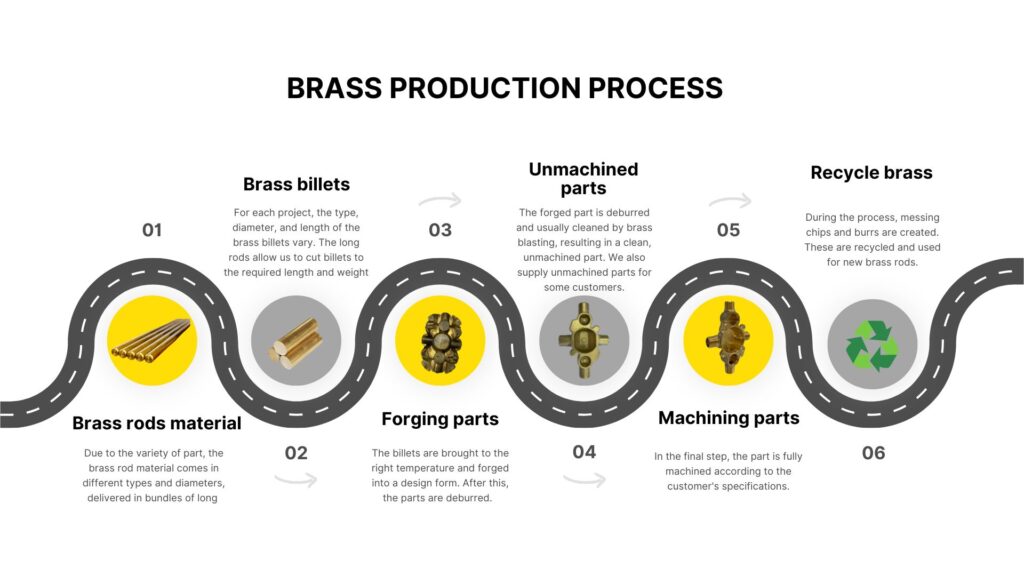
We are committed to a circular production chain where nothing goes to waste. An important part of our sustainable approach is the collection of waste material at each production step. This includes chips and starts and ends during sawing, burrs during hot forging, and chips and burrs during machining of our products.
In cooperation with our material supplier, we ensure that all this waste material is not simply thrown away, but given a new life. We send the collected material back to our supplier, who remelts it and processes it into new bars of the same high quality. These bars are then used again by us in the production process.
This closed-loop system allows us to use raw materials efficiently while reducing our carbon footprint. By converting waste material into new raw materials, we contribute to a more sustainable future and ensure that our production processes are both economically and ecologically sound.
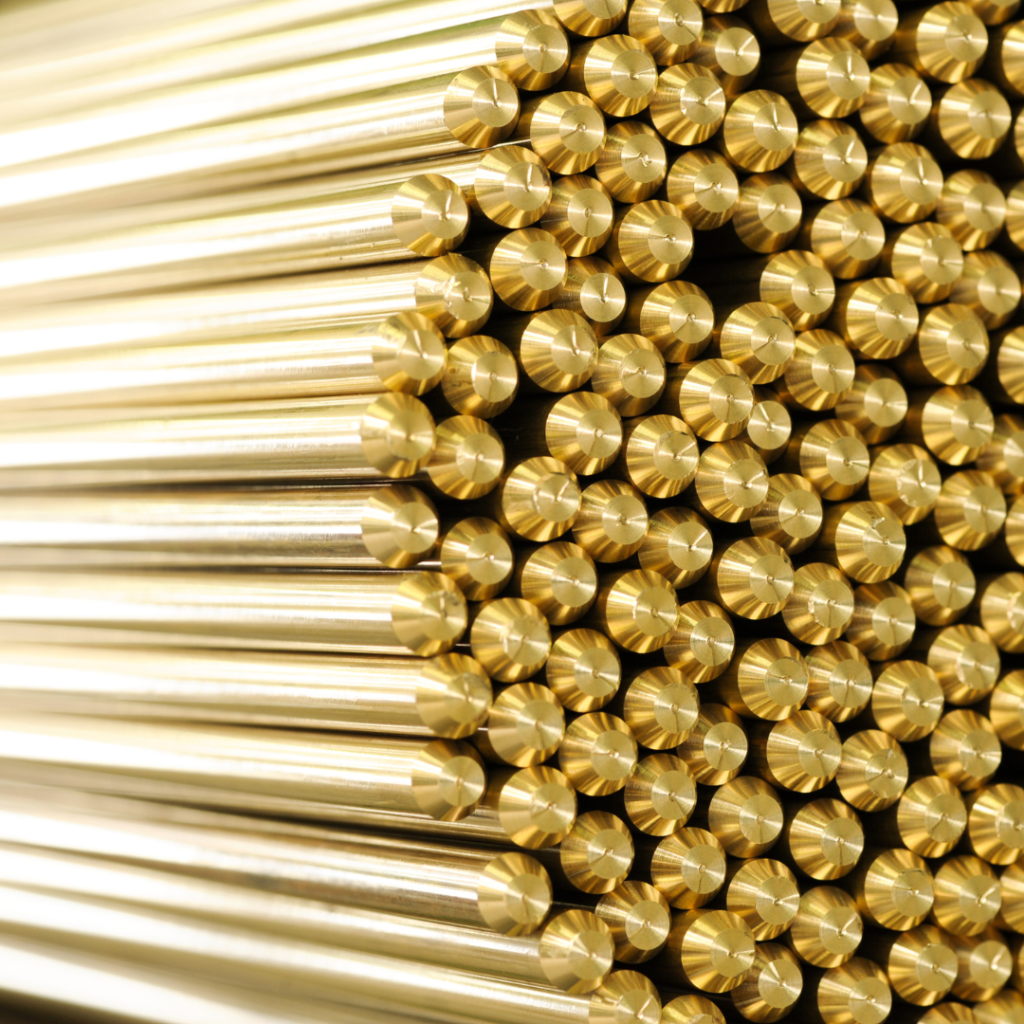
Our sawing process is fully automated. The bar material is placed in large bundles, after which the saw operates automatically. Through precise settings (length & weight) per product, minimal material loss is ensured.
Our sawing technologies are designed not only to ensure the highest product quality, but also to minimize environmental impact. During sawing, chips are released, which we carefully collect and reuse in our blasting machines. This reduces waste and saves on new blasting media, contributing to a circular economy.
In our manufacturing processes, we use graphite to optimize the performance and durability of brass components. Graphitizing-the incorporation of graphite into materials such as metal-offers significant benefits, depending on the application. We apply a carefully formulated oil mixture consisting of one-third graphite and two-thirds Texpar oil. This composition requires high craftsmanship and precision. Our facility has a 1000-liter drum of this blend, with ratios checked weekly to ensure consistency and quality. Below are some of the key benefits of graphitizing:
Graphite serves as an excellent solid lubricant, which means it helps reduce friction between moving parts. In some parts, this means the part lasts longer.
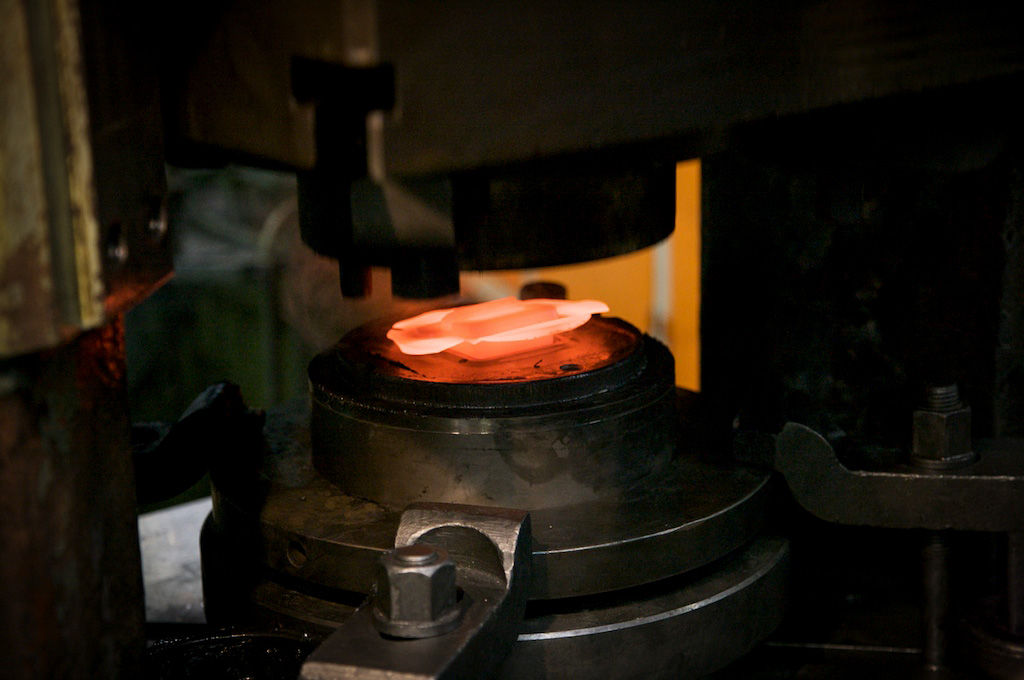
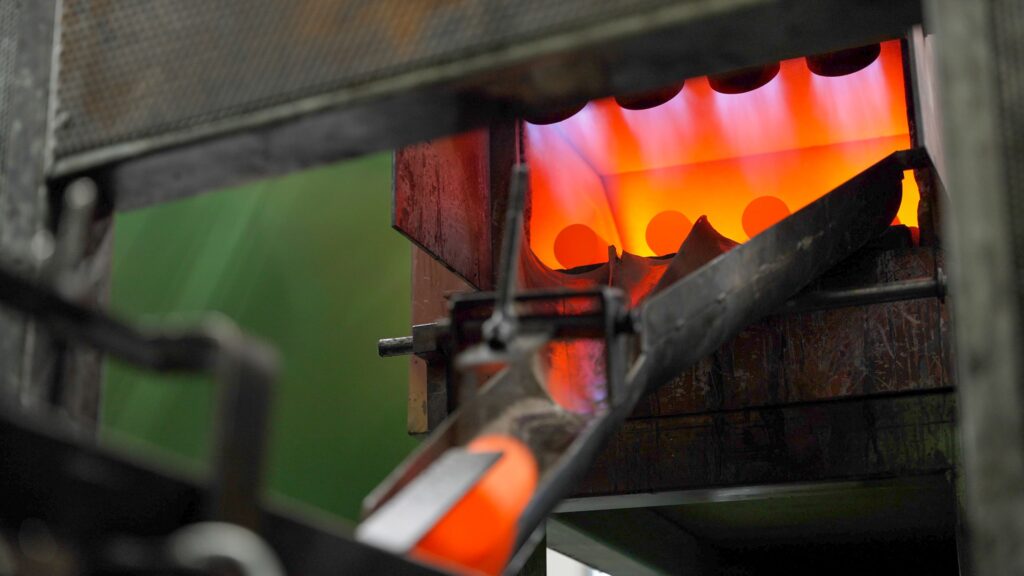
Graphite remains stable at very high temperatures, making it ideal for applications in extreme environments. This makes graphitizing very useful in specific cases for the hot forging process, which involves working at high temperatures. Our furnaces reach from 750 to as high as 820°C, depending on the alloy.
Graphite often makes materials easier to machine and shape. This is an advantage in manufacturing processes where complex shapes and high precision are required, such as when hot forging parts through dies.
Our manufacturing processes utilize both gas furnaces and induction furnaces to ensure the highest quality and consistency in our brass products. Gas furnaces provide precise temperature control and consistent heat distribution, essential for the homogeneity of our alloys. They are fast, effective and easy to set up. Induction furnaces, on the other hand, are known for their energy efficiency and speed, with direct heating via electromagnetic induction, which is crucial for maintaining alloy integrity and minimizing contaminants. By combining both technologies, we can flexibly respond to various production requirements and meet the highest quality standards.
At Allbrass, we are constantly striving to improve our products and processes with sustainability and environmental friendliness in mind. In this endeavor, we already have low-lead brass available today. However, one of our future goals and requirements is to switch completely to lead-free brass, a material known for its environmentally friendly properties and safety benefits. With this, we are taking an important step towards a more sustainable future, where we can offer our customers not only high-quality, but also environmentally conscious solutions.
Lead-free brass offers numerous advantages over traditional brass containing lead. By using lead-free brass, we can contribute to a cleaner environment, among other things. Avoiding lead in our parts means fewer risks to the health the end users and a reduction in the environmental impact of our production processes.
Although we do not currently offer completely lead-free brass, we are committed to eventually incorporating this sustainable choice into our product range. We are exploring the best opportunities to integrate lead-free brass into our offerings, taking into account both the quality of our products and the needs of our customers. Initial testing with lead-free brass has been completed and we look forward to the follow-up.
Hot forging offers numerous benefits to various industries, from strength and durability to cost efficiency and aesthetics. As specialists in hot forging, we understand the unique requirements of the market and offer customized solutions that meet the highest standards. By working with us, you are investing in reliable products that meet today’s needs and tomorrow’s challenges.
Wondering how our hot forged parts can improve your production process? Contact us, we are ready to help you!