Within the engineering department of Allbrass, everything revolves around precision, innovation and efficiency. 3D printing has developed in recent years into a powerful tool for prototyping, functional test parts and even production molds. Two such 3D printers have found a place in the department: the Prusa i3 MK3S and the brand new Prusa CORE One. In this blog, we list the differences and look at the added value of both models within a professional working environment – and specifically within our own department.
The i3 MK3S has proven itself to be a reliable workhorse in the world of FDM 3D printing. Here are some of its key strengths:
Ideal for: Rapid prototyping of smaller parts or test pieces.
The CORE One is Prusa’s latest high-end printer, designed with professional users in mind. Its advantages are clear:
Ideal for: Functional parts, production molds, small-scale test runs of end-use components, or enclosures made from technical plastics.
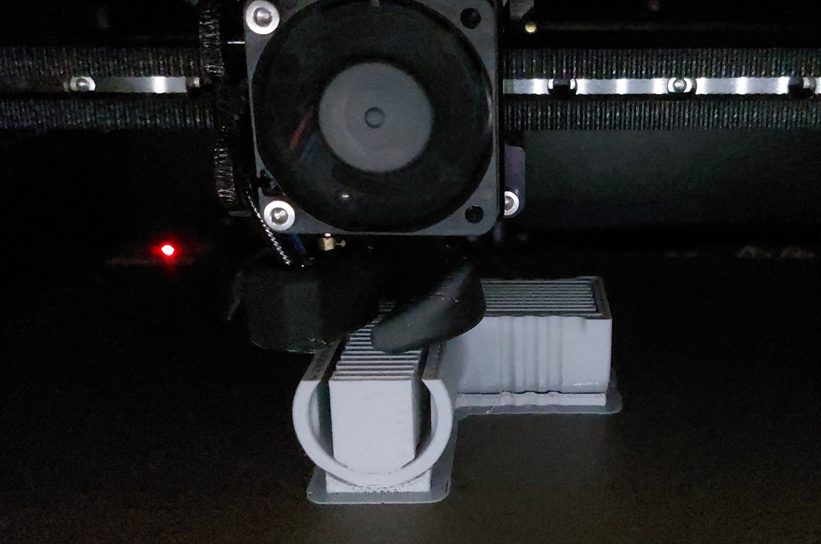
The introduction of 3D printers at Allbrass has marked a true breakthrough for our engineering department. Where we were once reliant on time-consuming and inefficient production methods, we can now move quickly, make adjustments on the fly, and continuously innovate.
We’ve been able to meet our need for machining aids through 3D printing—think of insert molds, extractors, spacers, and other custom tools required for processing our brass components.
Before the arrival of the 3D printers, these tools were made from bulk nylon stock—a process that was time-intensive, unsustainable, and wasteful in terms of material. Another option was casting resin or epoxy molds, but this too was labor-intensive and prone to error. With our first Prusa i3, we were able to produce these tools more sustainably and with significantly fewer labor hours. This new approach quickly proved its value.
The success of the initial printer soon created a new challenge: demand for printed tools exceeded the capacity of a single machine. This led us to seek expansion—and brought us to the Prusa CORE One. This newer printer is faster, more compact, and offers significantly more capabilities, especially in terms of automation. It now also enables us to print parts that can withstand higher mechanical stress—for example, fixtures used by robots within our production environment.
For an engineering department like Allbrass, it’s not a matter of either/or, but of both. By strategically deploying both printers—the i3 MK3S for quick, lightweight jobs, and the CORE One for technically demanding applications—we’ve built a flexible, efficient, and future-proof 3D printing environment.
The combination of speed, material versatility, and repeatability makes this technology indispensable to our modern production process.
Wondering how our hot forged parts can improve your production process? Contact us, we’re ready to help!