As sanitary systems become more compact, pressurized and design-driven, the expectations placed on brass components have never been higher. Buyers in the sanitary industry are no longer sourcing just on price or appearance. Mechanical strength, tolerances, surface quality and long-term reliability now drive procurement decisions. Two manufacturing methods dominate the market: casting and forging. While both techniques can produce functional brass components, the difference in quality, durability and total cost of ownership is significant.
This article outlines the critical differences between hot forged and cast brass components for sanitary systems — and explains why forging increasingly sets the standard for high-performance, low-defect solutions.
Brass casting involves melting the alloy and pouring it into a mold. Once cooled, the part is ejected and finished through machining or polishing. The process allows for flexible shapes and relatively low tooling costs in small series.
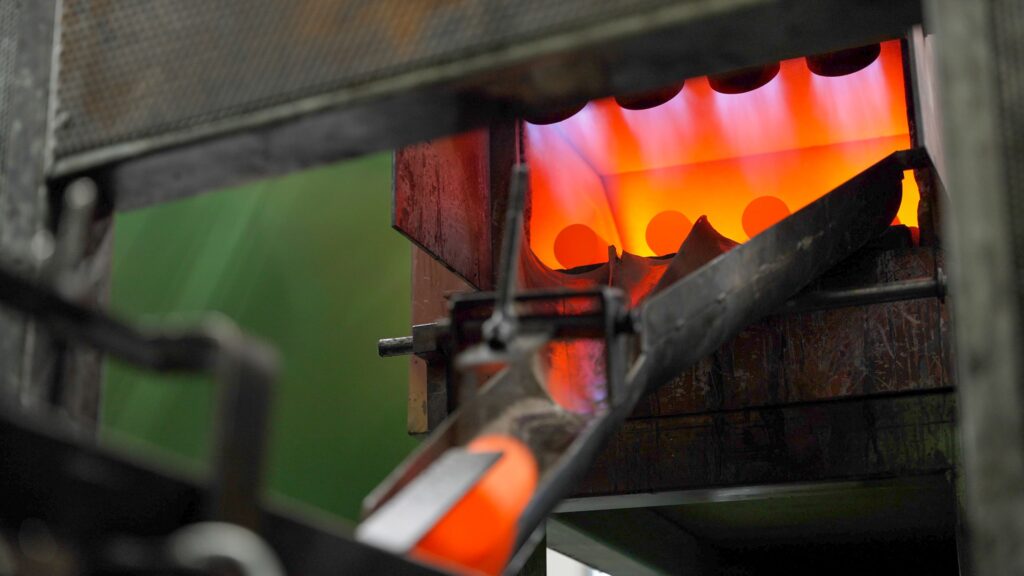
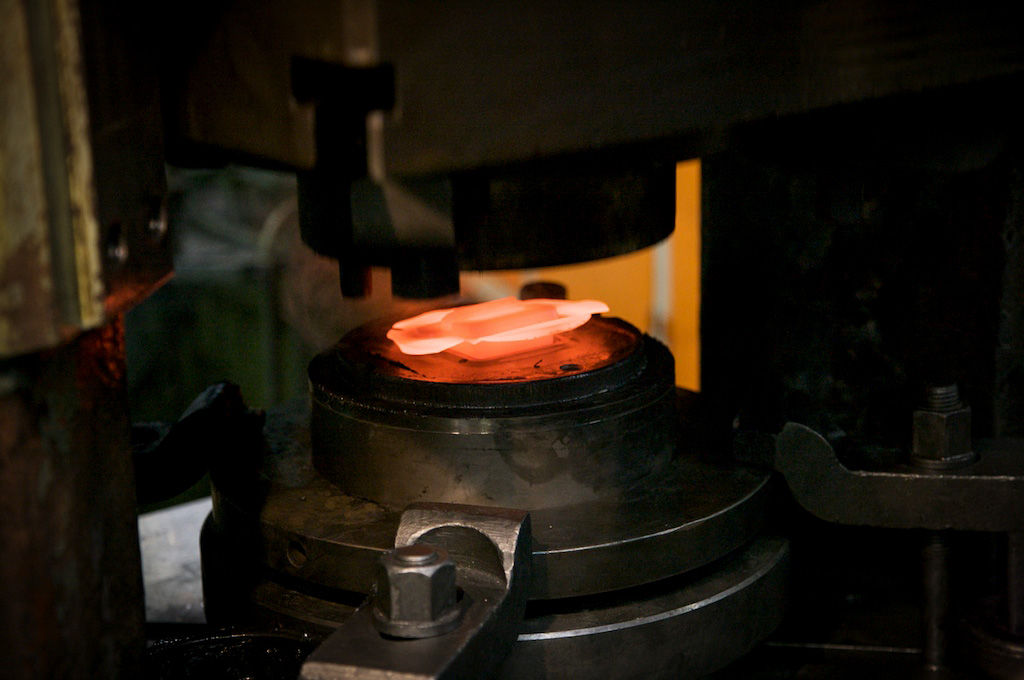
Hot forging, on the other hand, forms the brass under high temperature and pressure using a die. Rather than melting the metal, forging reshapes solid billets while aligning the grain structure, which leads to stronger, denser components. This method is ideally suited for functional components under pressure, or those that require tight dimensional tolerances and consistent surface finish.
Sanitary components, especially valves, fittings and cartridge housings, must withstand constant water pressure and thermal cycles without deforming, leaking or degrading. Forged brass offers superior mechanical properties due to the realignment of the material’s internal grain structure during deformation. This leads to:
Cast brass, by contrast, often contains microscopic voids and porosity caused by shrinkage during solidification. These internal defects may compromise sealing performance or reduce fatigue life in long-term operation – a risk many OEMs cannot afford.
Tight tolerances are a must for sanitary assemblies — whether it’s a mixer cartridge housing, a flow restrictor or a connection with an O-ring seal. Hot forging delivers consistently accurate net-shape parts with minimal variation between batches. Most forged components require only minimal secondary machining, resulting in better repeatability and fewer adjustments during assembly.
Cast parts, by nature, shrink during cooling and may warp or distort as the mold material reacts to heat. This requires more generous machining allowances, increasing production time, scrap risk and overall part cost. For applications where millimeter-level consistency matters — such as sealing interfaces — forging offers a clear advantage.
Sanitary brass components are often finished with chrome plating or powder coating, especially when they are visible in the final product. Forged surfaces are smoother, more homogeneous and free from pinholes or inclusions, making them ideal for aesthetic treatments. Cast parts may require extensive grinding or polishing to remove imperfections before plating, increasing handling costs and introducing variability.
For buyers sourcing both technical and visible components, forging helps ensure better plating adhesion, more consistent appearance and fewer cosmetic rejections.
Casting may seem cheaper at first glance, especially for small production runs or parts with complex geometries. But when factoring in material waste, machining time, quality control and failure rates, the total cost of ownership often favors forging, particularly in medium to high volumes.
Forging dies may have higher upfront costs, but their durability and output consistency reduce per-part costs over time. In many sanitary applications, a forged part’s longer lifespan and lower defect rate directly translate to cost savings — not just in manufacturing, but across the full product lifecycle.
Wondering how our hot forged parts can improve your production process? Contact us, we’re ready to help!