19-8-2026 By: Christel
Christel

Why Hot Forging Is an Excellent Choice for High-Quality Sanitary Components

In the sanitary industry, there is a growing demand for components that meet high standards in terms of strength, dimensional accuracy, and durability.
Manufacturing methods such as casting, machining, and hot forging each have their own area of application.

For many brass components produced in large quantities, hot forging offers significant advantages in mechanical properties, material utilization, and production efficiency.

Improved Material Structure and Strength

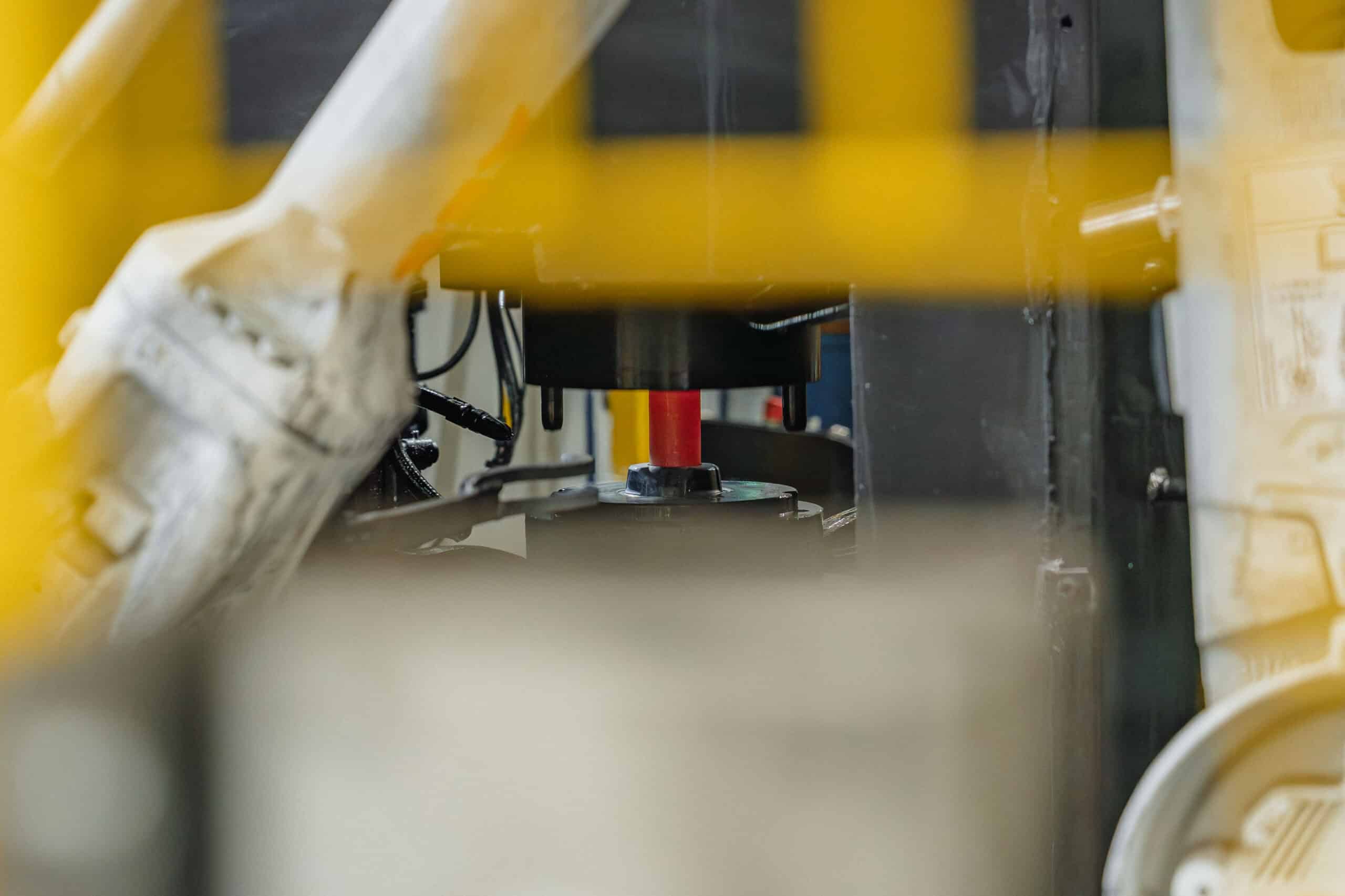
During the hot forging process, brass is heated to approximately 650 °C to 750 °C and deformed under high pressure in a die. This results in a dense material structure with favorable mechanical properties.

The main advantages are:
  • High material density
    The hot forging process significantly reduces internal porosity and results in strong, reliable components.
  • Favorable mechanical properties
    Hot forged brass parts generally offer higher strength and better resistance to mechanical stress than comparable castings.
  • Optimal fiber structure
    During forging, the material structure conforms to the shape of the product. This so-called grain flow contributes to high strength and excellent fatigue resistance.
Open Dag Allbrass 5

High Dimensional Accuracy

For sanitary components, a precise fit is essential to ensure a reliable seal and trouble-free assembly. Hot forging offers several advantages in this regard:
  • Tight tolerances
    The hot forging process enables the production of parts with tight tolerances, thereby reducing the need for secondary machining.
  • Consistent quality
    The process provides a high level of repeatability, resulting in large production runs of virtually identical components.
  • Minimal dimensional deviations
    Compared to casting processes, the risk of shrinkage-related distortions is generally lower, which improves dimensional stability.
Open Dag Allbrass 44

Reduced Post-Processing

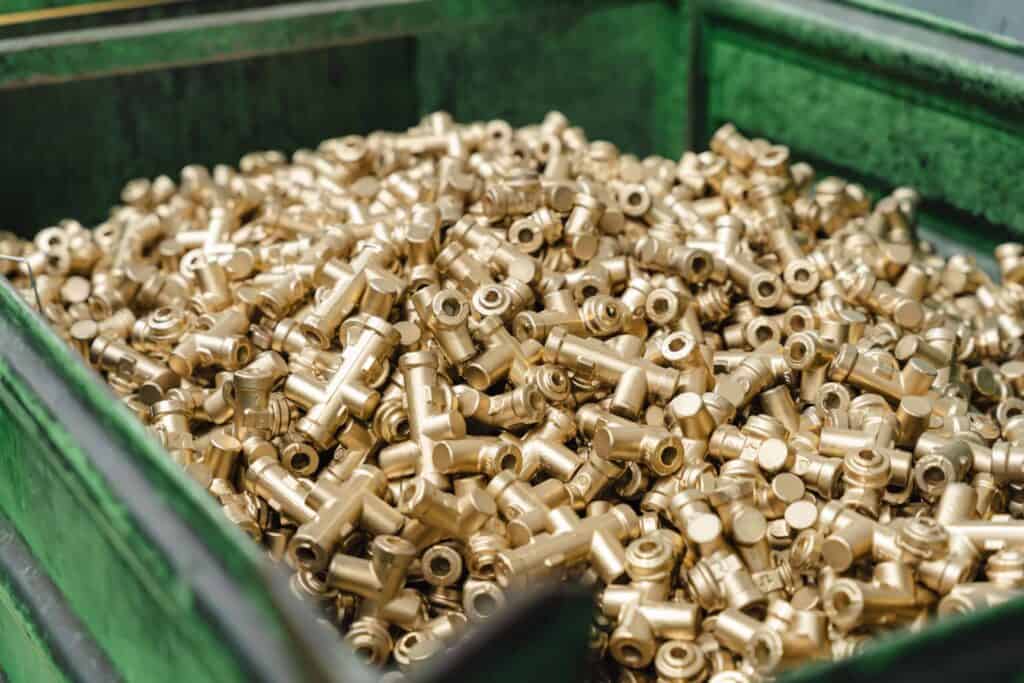
Hot forging is one of the so-called near-net-shape manufacturing techniques. The component leaves the die already very close to its final geometry. This offers several advantages:

  • Less machining required
    Less material needs to be removed to achieve the final dimensions.
  • Good surface quality
    The surface is generally suitable for further finishing, requiring only limited post-processing depending on the application.
  • More efficient production
    Reduced secondary operations lead to shorter production times, lower material consumption, and lower manufacturing costs.

Comparison with Machining

Machining remains an excellent production method for small batches, complex operations, and parts requiring extremely high precision. However, for larger production volumes, hot forging often offers clear advantages.

  • More efficient use of material
    Because the shape is largely formed during the forging process, less material is wasted compared with fully machining parts from bar stock.
  • Higher productivity
    Once the die has been developed, parts can be produced quickly and consistently.
  • Favorable material structure
    Due to the grain flow created during forging, hot forged components can provide beneficial mechanical properties in many applications.

Applications in the Sanitary Industry

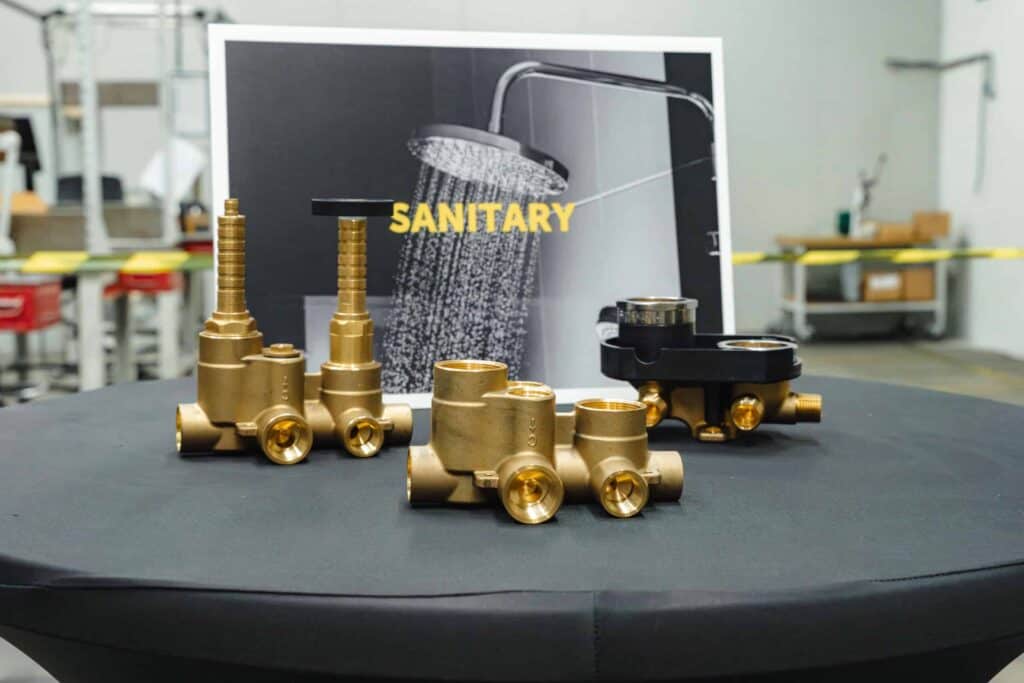
Hot forging is widely used for manufacturing brass components such as:
• faucet bodies;
• couplings;
• valve bodies;
• fittings;
• connection pieces;
• components for mixing faucets and shut-off valves.

For these applications, strength, dimensional stability, and reliable sealing performance are essential.

Conclusion

Hot forging is a proven and widely used production method for high-quality brass sanitary components. Thanks to the combination of a favorable material structure, high dimensional accuracy, efficient material utilization, and limited post-processing requirements, it is an attractive choice for many applications. Particularly in medium and high-volume production runs, hot forging offers an excellent balance between quality, reliability, and cost-efficiency.

Contact us!

Questions about this article?